Researchers update studies of killer cells, celiac disease screening and a more precise way to measure intestinal damage  By Amy Ratner, Director of Scientific Affairs
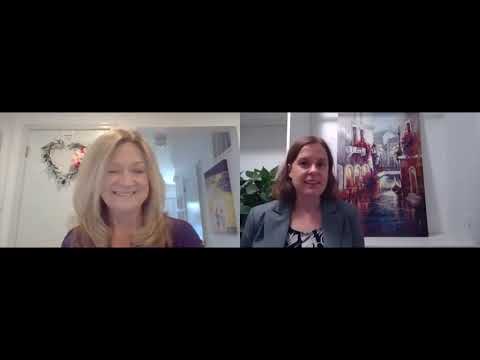
Three celiac disease researchers who have received grants from Beyond Celiac to fund their studies recently recorded video updates on their work.
Paul Klenerman, PhD, a professor of gastroenterology at the University of Oxford, Oxford, England, received the Beyond Celiac Established Investigator Award. He is studying killer t-cells that cause the actual tissue damage in celiac disease. An immunologist who has done extensive work in Hepatitis C and HIV, Klenerman is currently also playing a key role in the search for answers about COVID-19 as part of the COVID-19 Genomics UK Consortium.
“Killer cells can actually be involved in the tissue damage.”

Marisa Stahl, MD, an Assistant Professor of Pediatrics at the University of Colorado School of Medicine where she works with the Colorado Center for Celiac Disease, received the Beyond Celiac/SSCD Young Investigator grant. She is working on the Autoimmunity for Kids (ASK) study, a free health screening program open to all Colorado children, from one to 17-years-old, designed to detect celiac disease and type 1 diabetes.
“Our research is focused on universal screening for celiac disease and weighing [the] risks and benefits.”

Jocelyn Silvester, MD, director of research of the Celiac Disease Program at Boston Children’s Hospital, is the recipient of the Beyond Celiac Pilot and Feasibility grant. Silvester is investigating the use of RNA sequencing as a more exact way to measure intestinal damage revealed in a biopsy.
“Some of the problems with biopsies relate to first of all sampling, we have to check the right area… and once we have the biopsies making sure that we orient them so our pathologists can actually interpret them.”