
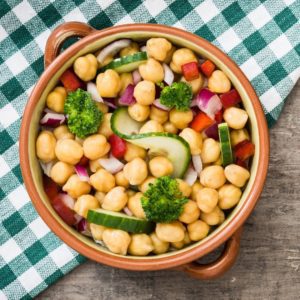
Are Chickpeas Gluten-Free?
Last reviewed September 2, 2026.
Yes, chickpeas are naturally gluten-free. They’re a legume, not a grain, so they don’t contain gluten to begin with.
Chickpeas go by a lot of other names too, including garbanzo beans, garbanzo, gram, Bengal gram, Egyptian pea, cici beans, chi chi beans and cece beans. All of these refer to the same naturally gluten-free legume.
That said, naturally gluten-free isn’t the same as certified gluten-free. Chickpeas, especially canned ones, can be processed in facilities that also handle wheat, barley, or rye, which creates a risk of cross-contact. If you have celiac disease, it’s always safest to purchase chickpeas labeled certified glutne-free, and always check the ingredient list on canned varieities for any added ingredients that might contain gluten. Not sure what to look for? Check out our Red Flag Ingredients Cheat Sheet.
What Are Chickpeas?
Chickpeas are a legume that comes in a few colors, most commonly a beige or tan shade, though black, green, and red varieties exist too. They’re a staple in Middle Eastern, Mediterranean, and South Asian cooking, showing up in dishes like hummus, falafel, and chana masala.
Chickpeas can also be ground into chickpea flour, also known as gram flour, besan, or chana flour. If you’re looking for information specifically about the flour, that page covers it in more detail.
Chickpeas vs. Chickpea Flour
Whole chickpeas and chickpea flour are both naturally gluten-free, but they’re not interchangeable in recipes, and they carry slightly different considerations.
Whole chickpeas (dried or canned) are the intact legume. Chickpea flour is chickpeas ground into a powder and used the way you’d use any other flour, in flatbreads, batters, and baked goods. Both can carry cross-contact risk depending on how they’re processed, so the certified gluten-free label matters for either one if you have celiac disease.
How to Prepare Chickpeas Safely
Dried chickpeas need to be soaked and then boiled, usually for an hour or two depending on how long they’ve soaked. Canned chickpeas are already cooked and just need a rinse before use—or, if you’re vegan, you may save the chickpea liquid, called aquafaba, and use it as a gluten-free, animal-free substitute for egg whites.
A few things to keep in mind:
- Check the label on canned chickpeas for a gluten-free label, since seasoning blends or broths added during canning can sometimes contain gluten.
- With dried chickpeas, cross-contact can happen if they’re packaged or processed alongside wheat, barley, or rye. Certified gluten-free dried chickpeas are the safest bet.
- When cooking chickpeas at home from scratch, using your own gluten-free kitchen setup removes most of the cross-contact concern.
Nutritional Benefits of Chickpeas
Chickpeas are nutrient-dense, offering a good amount of protein, fiber, folate, iron, and phosphorous. That combination makes them a solid addition to a well-rounded gluten-free diet, whether you’re using them whole in salads and stews or as a base for dips like hummus.
Chickpeas and FODMAPs
Chickpeas are a legume, and legumes are a common source of FODMAPs, a type of carbohydrate that can cause digestive discomfort in some people. According to Monash University, which developed and tests the low-FODMAP diet, canned and drained chickpeas are low-FODMAP at a quarter cup serving, while larger portions move into high FODMAP territory.
This is a separate consideration from celiac disease. Gluten is not a FODMAP, so following a gluten-free diet doesn’t address FODMAP sensitivity, and vice versa. If you have celiac disease and continue to have digestive symptoms after removing gluten, a low-FODMAP approach may be worth exploring with a dietitian. Learn more on our FODMAPs and Celiac Disease page.
Using Chickpeas in a Gluten-Free Diet
Chickpeas are a flexible ingredient for anyone managing celiac disease. They work well in:
- Salads and grain bowls
- Soups and stews
- Dips like hummus
- Roasted as a snack
- Mashed or blended into patties and fritters
As always, read the label on any packaged product before trying something new, and reach for certified gluten-free chickpeas when you can.
Frequently Asked Questions
Yes. Chickpeas are naturally gluten-free. They’re a legume, not a grain, so gluten isn’t part of their makeup. Cross-contact can occur during processing, so people with celiac disease should look for certified gluten-free chickpeas when possible.
Most canned chickpeas are gluten-free, but it’s worth checking the label. Some canned varieties include added seasonings or broths that could contain gluten, and processing facilities can introduce cross-contact. Certified gluten-free canned chickpeas are the safest option for people with celiac disease.
Chickpeas are a nutrient-dense legume, offering a good amount of protein, fiber, folate, iron, and phosphorus. They’re a naturally gluten-free ingredient that fits well into a well-rounded diet, whether eaten whole in salads and stews or blended into dips like hummus.
In small portions, yes. Monash University, which developed and tests the low FODMAP diet, has found that canned, drained chickpeas are low FODMAP at a quarter cup serving, while larger portions move into high FODMAP territory. This is separate from celiac disease, since gluten is not a FODMAP. If you’re managing both conditions, check out our FODMAPs and Celiac Disease page, which has more detail.