
Living with celiac disease often means managing serious symptoms that others can’t see. Many people with celiac disease look healthy on the outside even while dealing with anxiety, brain fog, accidental gluten exposure, and long-term impacts on their quality of life.
This infographic is designed to help you explain what celiac disease is really like. Sharing it can make the invisible parts of the disease more visible to friends, family members, schools, workplaces, and communities. It gives language and data to experiences that are often misunderstood or dismissed.
Just because “you don’t look sick,” doesn’t mean that you aren’t. Show people what it’s like to walk in your shoes by sharing this infographic.
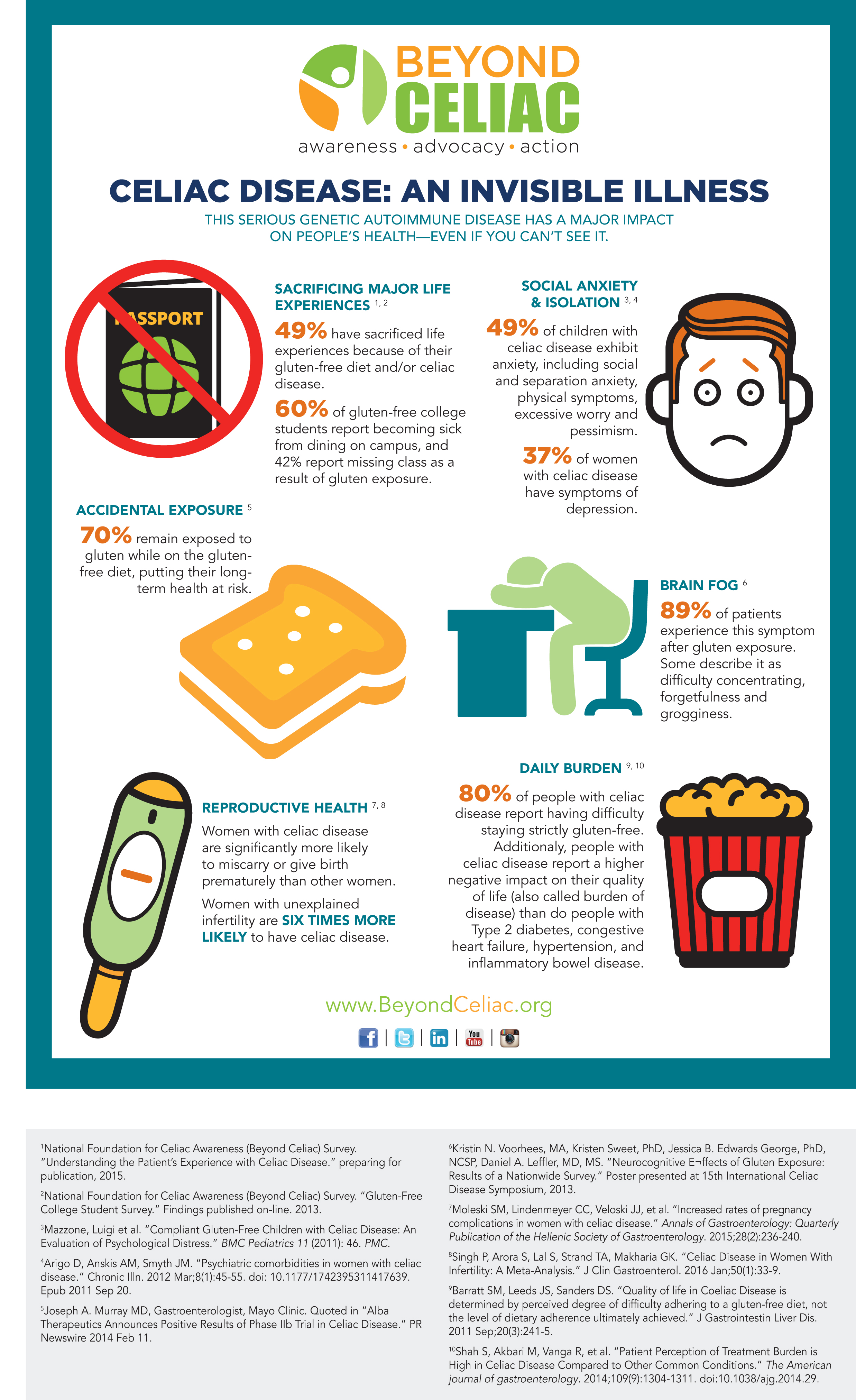
What this infographic helps explain
- Why celiac disease is a serious autoimmune disease even when symptoms aren’t visible
- The emotional and mental health impact of living with a lifelong medical condition
- Why managing celiac disease affects social life, school, work, and relationships
- How the burden of celiac disease goes far beyond following a gluten-free diet
Additional context you can share with others
For people living with celiac disease, the work doesn’t stop once a diagnosis is made. Gluten is present in many foods and environments, and avoiding it requires ongoing attention, planning, and self-advocacy. Even when someone is careful, accidental exposure is common and can lead to symptoms like fatigue, brain fog, anxiety, digestive stress, and long-term health consequences.
Because managing a gluten-free diet is often about prevention—being careful before any symptoms or damage occurs—others may not understand why certain accommodations are necessary or why social situations can feel stressful or isolating. This lack of understanding can add emotional strain on top of the physical symptoms of the disease.
Common Questions This Resource Helps Answer
- Why is avoiding gluten so difficult?
- Gluten can be hidden in foods, cross contact can happen easily, and labeling isn’t always clear. Even small amounts of gluten can trigger symptoms and immune damage.
- How does celiac disease affect mental and emotional health?
- Anxiety, depression, and brain fog are common, especially after gluten exposure. Managing a lifelong disease can also create chronic stress and social isolation.
- Why does awareness matter?
- When others understand celiac disease, it becomes easier to ask for accommodations, stay safe, and reduce stigma in schools, workplaces, and social settings.
Who May Benefit From Seeing This Infographic
- Friends and family members who want to better understand your experience
- Teachers, school staff, and administrators
- Employers and coworkers
- Coaches, caregivers, and community leaders
- Anyone you want to help understand that celiac disease is more than a diet
Starting a Conversation about Celiac
You shouldn’t have to explain or justify your health needs alone. This infographic can help start conversations and build understanding with the people around you. Share it as a tool for awareness, and explore Beyond Celiac resources for education, advocacy, and support as you continue navigating life with celiac disease.