
TG6 can help identify patients with worse neurological complications, according to a new study by UK researchers funded by Beyond Celiac
By Amy Ratner, director of scientific affairs
A test that detects an autoimmune response to gluten that targets the brain could increase understanding of neurological complications in those who have celiac disease and other gluten-related disorders, according to a new study by researchers in the UK.
Testing for Transglutaminase 6 (TG6) antibodies can identify patients who could develop accelerated brain atrophy and worsening physical functioning and mental health, researchers at the University of Sheffield found in a study funded by a Beyond Celiac Established Investigator grant. The study was published in the Annals of Neurology.
The study investigated whether brain atrophy, symptom severity, anxiety, depression and physical functioning were related to the level of TG6-IGA antibodies found in study participants.
Poorer brain health
“Persistent TG6 antibodies are associated with a variety of poorer brain health outcomes for patients with gluten-related neurological problems, including accelerated rates of brain atrophy,” the study says.
People in the study, both those who had celiac disease and those who did not, were referred to the neurology center at Sheffield Hospital due to more severe neurological problems. This included gluten ataxia, in which the immune system attacks the part of the brain that controls balance and coordination; gluten neuropathy, in which nerve damage causes numbness and tingling in the hands and feet and gluten encephalopathy, in which there is a combination of headache and accelerated brain disease.
Researchers compared records of TG6 blood test results to brain images and patients’ recent reports about their mental and physical health.
Study participants with and without celiac disease who had had a positive TG6 test in their records reported greater depression, symptom severity and worsened physical functioning, the study found.
TG6 and brain atrophy
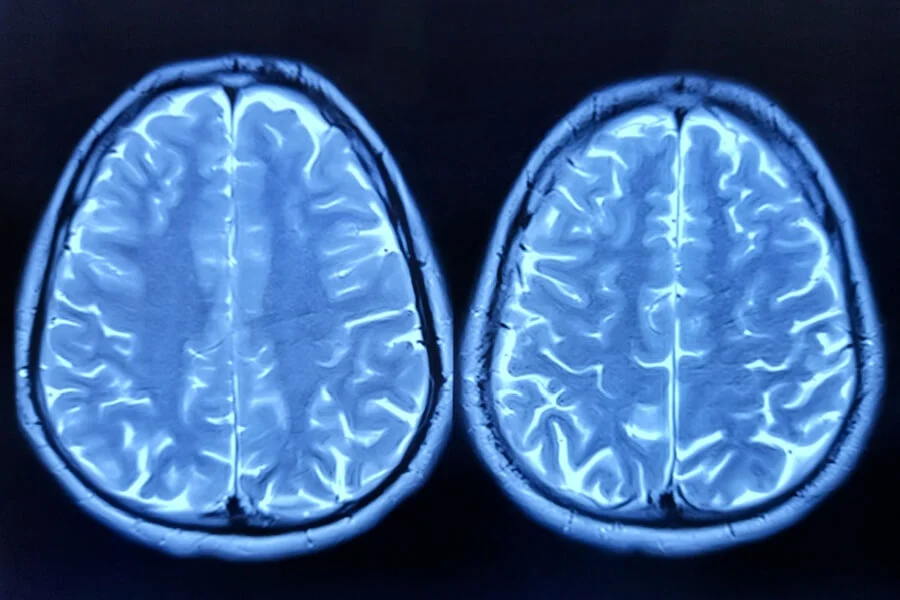
In those who did not have celiac disease, brain MRIs (magnetic resonance imaging) showed a faster rate of brain atrophy which was linked to the level of TG6. While those with celiac disease also had brain atrophy, it was not correlated with levels of TG6. Brain atrophy is the loss of brain cells and connections.
The study also found that strictly following the gluten-free diet resulted in decreases in levels of TG6.
Researchers were somewhat surprised by that lack of association between TG6 levels and brain atrophy in celiac diseases patients because two previous studies showed that brain atrophy was in some way linked to gluten antibodies, said Iain Croall, PhD, lead study author.
One earlier study found a link between autoimmunity to TG6 and brain atrophy in those newly diagnosed with celiac disease. Another concluded that patients with celiac disease had cognitive deficit, worsened mental health and white matter changes based on analysis of brain images
Possible explanations include the fact that in the earlier studies patients were recruited at celiac disease diagnosis, while in this study patients getting initial TG6 tests and brain scans varied from the newly diagnosed to those who had had celiac disease for ten or more years. These study participants were more likely to strictly follow the gluten-free diet and consequently have reduced TG6 levels than those who did not did not have celiac disease but had been diagnosed with a gluten-related neurological disorder.
Role of TG6 in celiac disease
“If you are a patient with celiac disease who is experiencing neurological problems such as ataxia or neuropathy, this [study] supports our view that the TG6 test is important as a monitoring tool,” Croall said. He noted that the test can keep track of how successful the gluten-free diet is at helping patients stop reacting to gluten and improve their neurological outlook.
TG6 blood testing could offer insight into why some people with celiac disease have neurological symptoms and others do not, the study says.
Role of TG6 in other neurological gluten-related disorders
Additionally, the test could be used to diagnose and monitor those who have neurological conditions related to gluten even when they do not have celiac disease.
“The celiac disease subgroup in this study still showed a number of links between TG6 positivity and quality of life outcomes,” the authors wrote. “Furthermore, this is the group where gluten-driven disease is not a contentious topic. The finding of brain atrophy being associated with TG6 in non-celiac disease patients arguably holds more value in validating that this can be a serious problem outside of a celiac disease diagnosis.”
Study participants without celiac disease often had unexplained neurological issues, including ataxia and neuropathy, which was subsequently diagnosed as being due to gluten. These patients were suffering from severe neurological problems treatable with the gluten-free diet, Croall said.
TG6 relates to more severe neurological disease
Overall, study participants who had at least one positive TG6 test appeared to have worse neurological disease. If over time they continued to have positive or high levels of TG6 their disease worsened. Patient reports of how strictly they adhered to the diet varied, with those who reported following a strict gluten-free diet eventually having negative TG6 test results.
The study shows robust evidence of an immune reaction to gluten and that TG6 specifically is associated with more severe neurological disease, Croall noted.
Different conditions driven by gluten might be underpinned by distinct autoimmune mechanisms directed at various transglutaminases, the study says. Tissue transglutaminase-IgA (TTG-IgA) is associated with intestinal damage in celiac disease, with TG6 associated with neurological responses to gluten.
However, the study notes, TG6 testing is not widely available in clinical practice. It is primarily used at the specialized neurology center at Sheffield Hospital.
How the study was done
The study was based on records from about 460 patients from the center who had routine TG6 testing for at least five years, about one third of whom had celiac disease. All study participants were on a gluten-free diet and brain MRIs (magnetic resonance imaging) had been done when considered medically necessary.
Daily symptom severity, assessment of depression and anxiety and quality of life were reported by 225 study participants who filled out questionnaires. And 103 patients had at least two brain imagining scans spaced five years apart. Cognitive testing was done in 125 patients, though a relationship to TG6 levels was not found.
Study limitations include the possibility that participants with celiac disease referred by a gastroenterologist might have had negative TG6 test results from the start of coming to the neurology clinic due to following a strict gluten-free diet. The self-reported levels of depression, anxiety and symptom severity could have been biased, and there was no control group.
Conclusions
The study concludes that there is evidence that persistent TG6 antibodies are associated with a variety of poorer health outcomes for patients with gluten-related neurological problems, including accelerated rates of brain atrophy in those who do not have celiac disease.
The results suggest that detection of TG6 is important for stratifying patient care. Follow-up should include monitoring with the goal of eliminating TG6 through the gluten-free diet. “This applies to all patients with celiac disease and those with gluten-responsive neurological problems without celiac disease,” the study says.
“This study validates the utility of TG6 testing in patients with gluten-responsive neurological problems, regardless of celiac disease status,” the authors wrote.
Ongoing research
Sheffield scientists are doing ongoing research, also funded by Beyond Celiac, to determine whether positive TG6 testing in anyone with celiac disease, not only those with ataxia or neuropathy, would put them at greater risk of having some level of neurological problems.
“If that were the case, it would be important to offer [TG6 testing] to everyone with a celiac disease diagnosis so they can better know what their risks are,” Croall said.
Researchers will expand TG6 testing from the neurology department to the gastroenterology department to determine how frequently the test is positive in patients with classic celiac disease. The study will also include cognitive function testing and advanced MRI brain scanning to better understand how TG6 causes damage to the brain.
You can read more about the study here.