WHAT IS THE ACeD Study?
Assessment of KAN-101 in Celiac Disease
Kanyos Bio, a wholly-owned subsidiary of Anokion SA, is investigating a potential treatment for Celiac Disease (CeD) in a phase 1 clinical study in volunteers with CeD.
Are you qualified for the ACeD study?
- ❯ 18-70 years old
- ❯ Diagnosed with Celiac Disease (CeD)
- ❯ Gluten-free diet for more than 1 year
*Other criteria apply.
WHAT IS KAN-101?
KAN-101 is an investigational treatment for Celiac Disease (CeD). It encompasses a well-described gluten antigen that is implicated in driving the onset of Celiac Disease. We deliver the antigen to the liver and immune system with our liver targeting glycosylation signature.

ABOUT CLINICAL RESEARCH
What is clinical research?
Clinical research is the process of developing medicines or therapies to possibly prevent, treat, or help with diseases. Before a medicine can become widely available, it must be tested in a series of clinical trials (sometimes called clinical studies) to understand its safety and effectiveness.
Your safety is the top priority of any clinical trial
Study investigators closely monitor the health of everyone who volunteers for clinical trials and receives study medications. If your health gets significantly worse, your study team will decide the best way to protect your health. This might include leaving the study early.
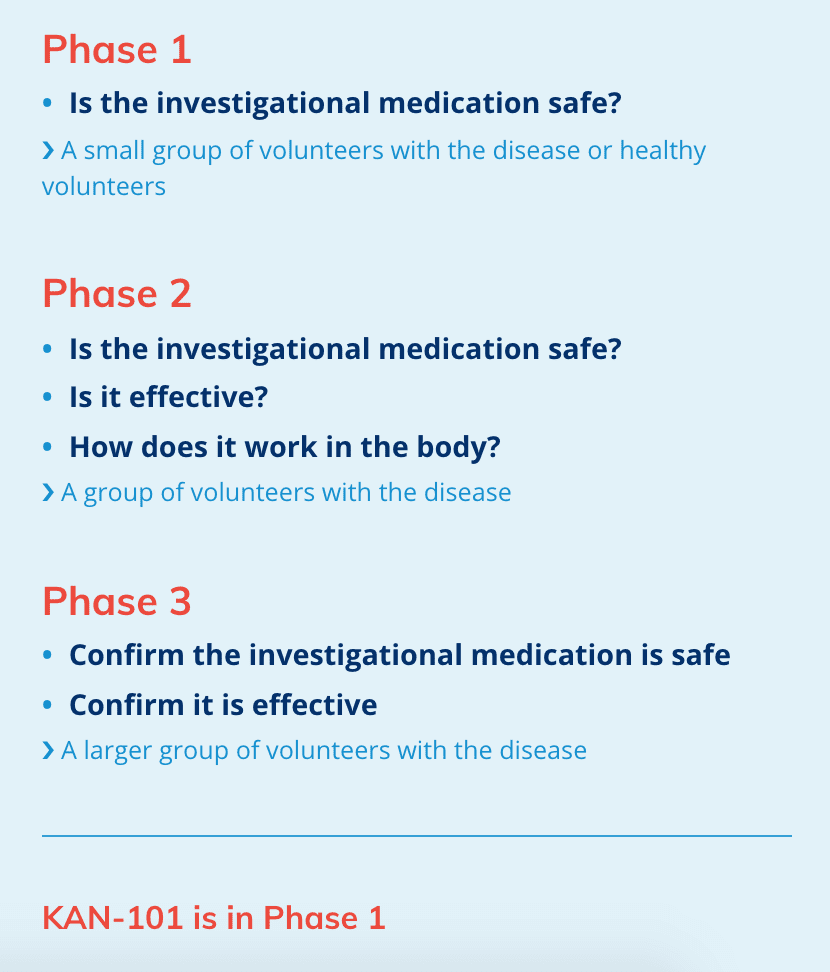
The phases of clinical research
There are usually three phases of clinical trials that investigational medications must go through before regulatory authorities can consider approving them for wider use. These phases study different aspects about the investigational medications and look at it in different groups of people.
Taking part is voluntary
You do not need to take part in any clinical trial if you don’t want to. Even if you qualify and decide to join, you are free to leave at any time. Just let your study team know so they can do a final health check.
Taking part is at no cost to you
The study medication and all trial-related tests and procedures not considered part of your usual care are normally provided at no cost. If you live in the US, you don’t need insurance to participate. In some locations, transportation to and from study visits or reimbursement for travel-related costs may also be provided, so be sure to ask your study team.
Learn more about the ACeD study at anokion.com/aced.