Celiac Disease and Health Equity
Beyond Celiac and Health Equity
Beyond Celiac believes in a world where we all can live healthy lives free from bias and barriers. Across our work, we must engage diverse perspectives and promote equity in our community to realize our vision of a world beyond celiac.
Our Diversity, Equity, and Inclusion Mission
Beyond Celiac fosters a sense of belonging by elevating underrepresented voices as we work together for a cure. We seek to be a community that welcomes diverse perspectives and provides meaningful opportunities to empower marginalized populations.

The Need for DEI in Celiac Disease
The vision of Beyond Celiac is a world in which people with celiac disease can live healthy lives, free from social stigma and fear of gluten exposure – A world Beyond Celiac.
At the heart of this vision is a world in which all people have equal access to good health choices, healthcare, and health outcomes.
Our work is dedicated to finding treatments and a cure for celiac disease, and part of that effort is focused on reducing disparities, both in diagnosis and access to resources. Achieving health equity comes from ensuring equity of opportunity and access in all facets of life for all members of the celiac disease community.
As a result, our ongoing commitment is to continue advocating for access to healthcare and the right for everyone to live their healthiest life, especially communities that are disproportionately affected by systemic, longstanding inequities of any type. We recognize that only by working with and listening to people of all races, backgrounds, ethnicities, sexual and gender orientations, abilities, and cultural backgrounds can we truly understand and appreciate one another and fulfill our mission of a world Beyond Celiac. Our work in all areas will reflect this important truth – in science, in events and community resources, in partnerships, and in all of our interactions with the celiac disease community.
When we say ‘together for a cure’, we mean everyone.
We believe the way forward is in genuinely moving together, with understanding, acceptance, justice, and fairness for all.
Celiac Disease Disparity Research
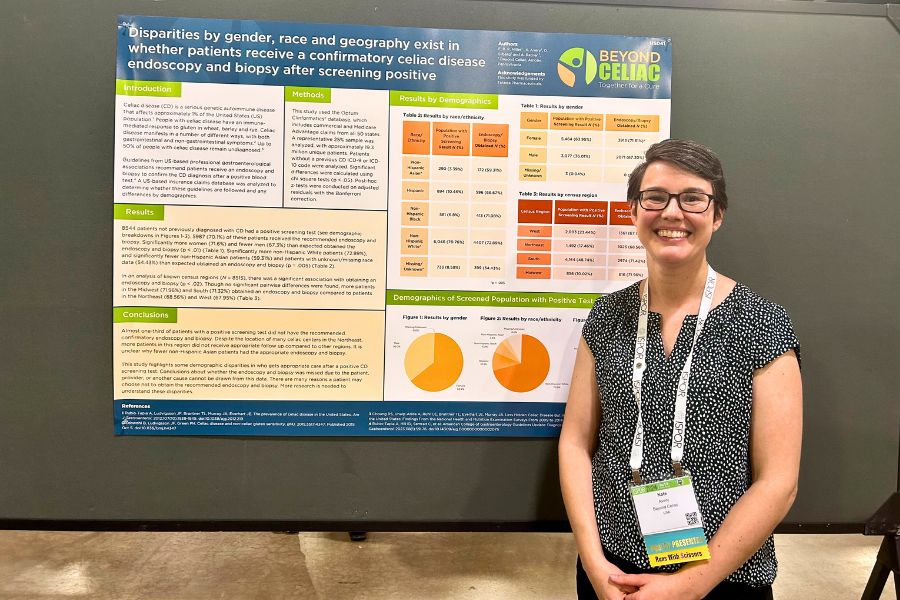
Studies, including some helmed by Beyond Celiac, are beginning to uncover vast disparities in celiac disease diagnosis and treatment. More work is needed in this area, but so far research has found:
- Racial and ethnic healthcare disparities in celiac disease diagnosis were indicated by analysis of geographic and demographic distribution of celiac disease in the United States. The analysis was based on evidence from 2016 Medicare and Medicaid fee-for-service claims reviewed in a project done in partnership between Beyond Celiac and the National Minority Quality Forum. The groups partnered to examine and address health inequities in the diagnosis and treatment of celiac disease. Read more
- Black people and those with Medicaid and Medicare who went to the doctor with iron deficiency anemia and chronic diarrhea had about 90 percent decreased odds of having the appropriate follow-up, concluded researchers from the University of Chicago Medicine section of gastroenterology, hepatology and nutrition and Harvard School of Public Health. Read more
- Black Americans (63%) are significantly more likely than Hispanic Americans (49%) and White Americans (47%) to have no awareness of celiac disease and/or gluten sensitivity, suggesting potential health inequities in both diagnosis and treatment. Read more
- Only 8% of Black Americans know that celiac disease often runs in families, compared to 21% of Hispanic Americans and 24% of White Americans. Read more
- At the University of Alabama at Birmingham, a registry of celiac disease patients showed that Black Americans with biopsy-confirmed celiac disease were more likely than non-Hispanic White Americans to have negative results on the most commonly-used diagnostic blood test for celiac disease, the anti-tissue transglutaminase immunoglobulin A (TTG) blood test. A positive TTG test will often trigger an endoscopy and biopsy for celiac disease diagnosis. The study raised the question of whether further confirmatory testing for celiac disease is deterred in Black Americans in general clinical practice. Read more
- A 2013 retrospective study identified inconsistencies in the testing of celiac disease at a Texas hospital, finding many children presenting with celiac disease symptoms were not being tested. The study stated that “children’s race/ethnicity, but not their associated gastrointestinal symptoms predicted whether celiac testing was undertaken… none of the children self-identified as African-American…had celiac serologic testing completed.” Read more
- Research indicates that LGBTQ+ patients are more likely to experience a lower quality of care and poor health outcomes. Nearly 1/6 report facing discrimination in accessing healthcare and 1/5 say they have avoided medical care for fear of discrimination. Read more