
Dermatitis herpetiforme
Related Conditions: Dermatitis Herpetiformis
Dermatitis herpetiformis (DH) is a severe, chronic skin rash associated with celiac disease.
The symptoms of dermatitis herpetiformis are extremely itchy and blistering skin. Sometimes referred to as gluten rash or celiac rash, DH is a chronic condition that is considered to be the skin form of celiac disease. Not all people with celiac disease develop DH, but most people with DH have celiac disease.
The rash usually occurs on the elbows, knees, and buttocks and it is typically symmetrical, meaning it appears on both sides of the body. When this gluten-related rash goes away, which it often does spontaneously, it may leave brown or pale marks on the skin where pigmentation is lost.
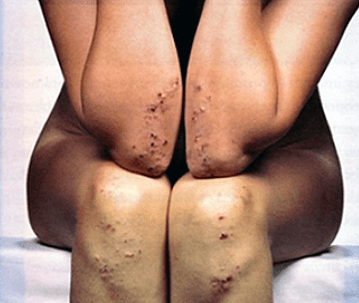
DH is commonly mistaken for other conditions such as:
- Eczema
- Acne
- Herpes
In the past, DH was also known as Duhring disease, Duhring-Brocq disease or Brocq-Duhring disease.
Who Gets Dermatitis Herpetiformis?
- Based on a study of US residents from 2005-2025, a little more than 3% of adults with celiac disease also had dermatitis herpetiformis.
- Dermatitis herpetiformis tends to affects men and women equally
- In the same study, 70.5% of participants with CD were women, but only 53.2% of those with DH were women.
- Dermatitis herpetiformis generally starts in adulthood
- It’s uncommon in children, but it can occur
Only about 20 percent of people with DH have intestinal symptoms of celiac disease, however, biopsies show that 80 percent have some degree of damage to the small intestine, especially if a high gluten diet is maintained.
Dermatitis Herpetiformis and Celiac Disease
DH is a skin manifestation of celiac disease and is part of the abnormal immune response to gluten. For those with celiac disease and DH, eating gluten triggers an autoimmune response which causes DH blisters to form. This rash is connected to celiac disease, not non-celiac gluten sensitivity (‘gluten sensitivity’).
Dermatitis Herpetiformis Symptoms and Testing
Dermatitis herpetiformis symptoms include:
- Extremely itchy skin
- Blisters
- Lesions
It can appear anywhere on the body but most frequently appears on the elbows, knees, buttocks, lower back and scalp. Doctors diagnose dermatitis herpetiformis by performing a biopsy on the cells under the top layer of skin.
Learn more about dermatitis herpetiformis symptoms and testing.
Dermatitis Herpetiformis Treatment
Dermatitis herpetiformis treatment consists of a lifelong gluten-free diet, just like celiac disease. It may take approximately six months to notice some improvement in the skin condition, and up to two years or more to achieve total control through a gluten-free diet alone. Additionally, rash symptoms can be controlled with dapsone, an antibacterial medication.
Learn more about dermatitis herpetiformis treatment.
Dermatitis Herpetiformis Research and Other Resources
Read dermatitis herpetiformis research and other resources.
How Do People with Celiac Disease Experience Dermatitis Herpetiformis?
-

Rashes and blisters form on my hands and sometimes move to my shins. It causes my fingers to swell in the areas with the rash. It’s uncomfortable and looks gross.
HP
-
I was put on a gluten-free diet since childhood. I discovered that I take 5 days to react and end up with full body sores much similar to terrible bouts of mosquitoes. I did realize that when I was younger, but I mistook it for molluscum contagiosum.
Zach Pile
-
I started getting DH around the age of 16, like hives on my face around my nose. The rash felt like pieces of poisoned glass trying to escape through my pores. Years later, I was diagnosed with CD. Finally, an explanation! And a gluten-free diet saves the day!
PK

How Do You Experience Dermatitis Herpetiformis?
At Beyond Celiac, we’re collecting real stories from people living with celiac disease to highlight how symptoms affect everyday life.
Your experience with dermatitis herpetiformis can help others feel seen, understood, and empowered. We only share first names or initials to protect your privacy. These stories raise awareness and help others recognize how celiac disease shows up in different ways.
Use the form below to share your experiences with dermatitis herpetiformis.