
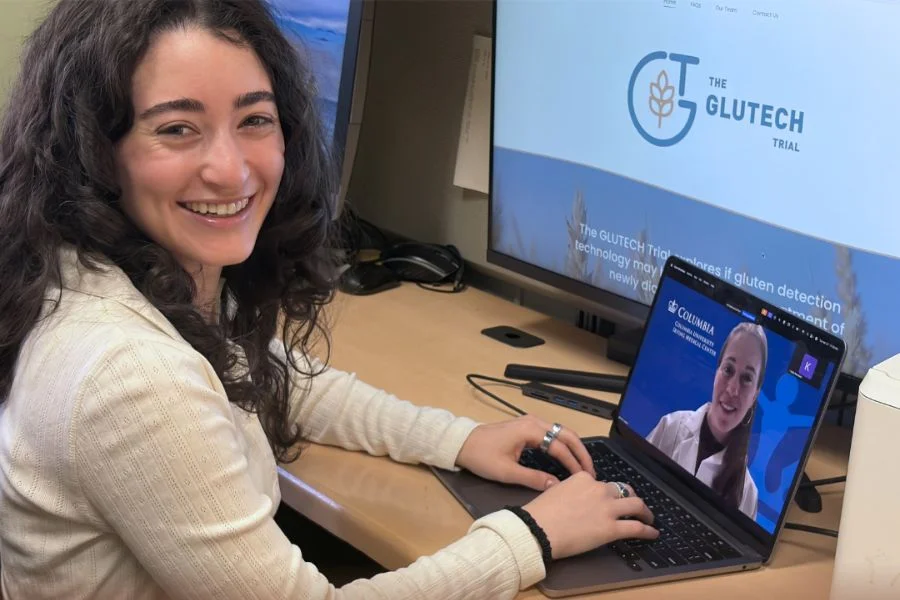
Ashley Berg, Associate Director of Science
The GLUTECH trial is investigating the effectiveness of gluten detection technologies combined with telemedicine in managing celiac disease in adults with newly diagnosed celiac disease. The trial is currently enrolling participants at Columbia University (NYC), Beth Israel Deaconess Medical Center (Boston), University of Chicago, and Vanderbilt University (Nashville). This NIH-funded randomized trial is led by Benjamin Lebwohl, MD, MS, Randi Wolf, PhD, MPH, Jocelyn Silvester, MD, PhD, Sonia Kupfer, MD, and Dawn Adams, MD.
Eligibility
Adults aged 18 to 75 years recently diagnosed with celiac disease and on the gluten-free diet for less than 4 months are eligible. Participants must be willing to use gluten detection technology, willing to come to one of the 4 study sites for 2 in-person visits, and not be pregnant or planning to become pregnant during the 12-month study period.
Study details
Participants will be randomly put into one of two groups. One group will get ongoing virtual visits with a dietitian. The other group will get the dietitian visits plus gluten detection technology. This involves using a device to check for gluten in urine, to see if it helps participants monitor their diet more effectively.
The GLUTECH trial will last 12 months and involve two visits to the study site; one visit at enrollment and one visit at the end of the study. Between enrollment and the end of the study, there will also be three virtual visits.
Participants will be asked to fill out surveys about diet, symptoms, mood and quality of life, and will have an endoscopy at the end of the study to see how well their intestines healed. Participants will also have a small amount of blood drawn and submit a urine sample during the first and final visits at one of the 4 sites mentioned above.
The study will assess participant outcomes, including intestinal healing and quality of life. Results will help study investigators understand how to give the best care to those newly diagnosed with celiac disease.
Participants will receive an iPad at the beginning of the trial and can also earn up to an additional $565 for participation. Those who do not get randomized to the gluten detection technology group will be provided with samples of the technology at the end of the study if desired.
Beyond Celiac is working to help raise awareness for this trial as part of our commitment to accelerating research. For more information about the GLUTECH study and to see if you qualify, visit this link. More information about the trial is also available at ClinicalTrials.gov.